
Soccer field size is a very important issue to create a professional playground and in football betting. In 2025, the World Football Federation continues to update new regulations on field size to suit global development trends. The following article J88 will help you understand the standards, as well as detailed requirements when building.
The importance of soccer field size that players do not know
Soccer field size Not only is it a physical factor, it also directly affects the quality of competition, tactics, and player experience. Compliance with size regulations brings benefits such as:
- Ensuring fairness: All teams compete under the same conditions, minimizing differences due to field factors.
- Promote tactical diversity: Teams can switch between two tactics more flexibly when the pitch has a standard ratio between length and width.
- Injury prevention: Standard fields often come with uniform surfaces, standard lighting and drainage systems, contributing to protecting players’ health.
- Meet the requirements of professional competition: From amateur to international level, soccer field size is the top criterion for a match to be recognized.

Learn about soccer field size dimensions
Soccer field size standards 2025
Soccer field size Not only are they technical specifications, but they are also fundamental factors that ensure a fair, attractive, and legal match. Depending on the number of players, FIFA has issued specific and strict regulations that are applied consistently worldwide:
>> Read more: j88vip
Stand a Chance To Win Bets Easily from Top-Notch SURE Tips >>> CLICK HERE To Get Daily Sure Football Predictions From Experts.
Standard FIFA 5-a-side mini soccer field size
This is soccer field size The standard applied by FIFA for professional tournaments around the world. It is 105m long, 68m wide, and usually has a central circle with a radius of 9.15m. In particular, each corner of the field has a small arc with a radius of 0.25m, which is where corner kicks are taken.
This type of court can be built indoors or outdoors with a roof. Usually using artificial grass or synthetic plastic carpet with good anti-slip and elasticity. In addition, the small area helps save construction and maintenance costs, making it easy to organize small-scale tournaments.
11-a-side soccer field size according to international standards 2025
The 11-a-side football field is the official type of field in all professional tournaments, usually 105m long and 68m wide. Usually has a radius of 9.15m, which is the starting position of the match, and the ball is re-kicked off after each goal.
The surface must be natural grass or artificial grass of FIFA-certified quality, and must ensure uniform lighting throughout the field if the competition is held at night. For stadiums serving professional tournaments, the stands must ensure safety, capacity as required, and have standard emergency exits.
Correct size of 7-a-side mini soccer field
Seven-a-side football is a popular form of football in semi-professional leagues, school football fields, private rented fields, and office sports activities. The field has an average area, suitable for many ages, including children and adults, usually from 45m to 65m long, from 25m to 45m wide.
This type of field is easy to deploy on a flat surface with an average area, does not require too complicated infrastructure like an 11-player field but is suitable for semi-professional football teams, amateur competitions or field rental services. In particular, it optimizes construction costs but still ensures the tactical nature of the game.

Goal size of 7-a-side football field
Detailed requirements when building a football field
To get soccer field size To be standard, whether serving amateur or professional competitions, investors not only need to comply with the rhythm and size but also pay attention to the following technical requirements:
Court surface
For mini soccer fields, artificial grass is preferred because of its reasonable cost, ease of construction, and ease of maintenance. For professional 11-a-side soccer fields, natural grass is often chosen to provide an international standard competition experience, although it comes with high maintenance costs.
To achieve soccer field size Standard, the court surface must be absolutely flat, not bumpy or concave to avoid injuries during competition. Drainage capacity is an important factor, which needs to be carefully calculated right from the foundation design stage so that the court is not flooded when there is heavy rain.
Drainage system
Professional football fields are always designed with a slight slope from the center to the two edges, usually about 0.5 to 1%, to help rainwater easily drain off the grass surface. The drainage system, built around the field or underground, connects to the main drainage system.
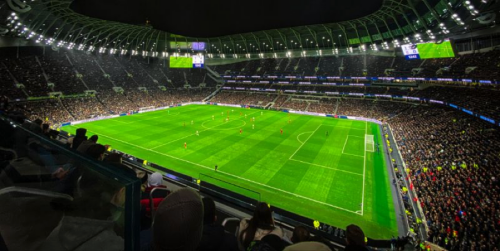
Set points to create a standard playground
Lighting, fence
For football fields serving night matches, especially five-a-side and seven-a-side fields, a standard lighting system is a must. The lights must ensure a minimum illuminance of 200 lux, avoiding shadows or glare, and the lamp post system should be from 6m to 1m high depending on the type of field.
The ideal height is to ensure that the ball does not fly out, causing danger to people around. The net should be made of durable materials such as large-fiber parachute cord or plastic-coated steel mesh, anti-corrosion, weather-resistant.
Conclude
Soccer field size is the fundamental factor to ensure a match takes place professionally, fairly, and safely. Whether you are an individual investor, a stadium owner, or a tournament organizer, understanding the standards at J88 will help optimize efficiency and enhance the experience.
Get today’s sure football prediction here