
Why Technology Is Becoming an Important Part of Sports
Data, sensors, and algorithms breathe life into miracles in sport. They assist with in-game decision-making and characterize talent that goes unnoticed. They also prevent injuries before any signs of discomfort manifest. For bettors, this isn’t innovation; instead, it’s a trove of information. Knowing how tech operates allows you to forecast events. In today’s matches, the sharpest advantage one can have is virtual.
Real-Time Decision-Making
Split-second choices alter the whole course of the competition. A mid-game football coach does not wait until the half-break to assess fatigue levels and passing metrics; he utilizes heat maps. With tablets positioned at the sidelines, data streams live. If you wish to observe real-time matches, you can تطبيق مراهنات and follow live statistics as the game progresses. Gone are the days when gut feelings dictate performances. It is now about crunch time, numbers sprinting acceleration, tackle efficiency, ball possession distribution zones, and countless others that refresh every second.
Formula 1 takes it even further tactically with pit walls monitoring tire wear, engine temperature, and aerodynamic drag in real time. A click can alter a race strategy, and attitude changes can be executed quickly. It’s astonishing to think that this kind of speed didn’t exist two decades ago, and now, it decisively secures titles.

Injury Prevention through Smart Wearables
Saving a career or season is as simple as making one right move, and that is how wearables prevent injuries for athletes and club investments for millions. A sensor can be affixed to a shirt, boot, or skin for a couple of dollars, gathering thousands of data points every minute. Such early trouble detection is becoming the future, and here is what needs to be monitored:
- Muscle strain patterns: alerts when forces exceed normal levels.
- Joint stress: signals excess load on knees or ankles.
- Sleep and recovery cycles: assesses rest post-activity or post-movement.
- Hydration levels: alerts when a lack of fluids compromises performance.
This is far from science fiction. The technology is used by Manchester City and NBA teams like the Golden State Warriors. With less injury risk, teams can maintain stable lineups, which makes it a better option for data-focused fans when betting.
Stand a Chance To Win Bets Easily from Top-Notch SURE Tips >>> CLICK HERE To Get Daily Sure Football Predictions From Experts.
The Digital Transformation of Coaching
Modern sports aren’t just shaped by the whistle anymore. Coaches don’t just monitor practices and matches; they analyze, simulate, and forecast performance. Their best assistant isn’t always human—it’s digital now. From the youth academies to the World Cup finals, coaching is becoming a precise science through data platforms, AI systems, and VR tools. This means training plans become smarter, decisions are sharper, and match preparation is deeper. This isn’t replacing instincts; instead, it’s machine-enhancing precision instincts. For bettors, this tech evolution alters everything—patterns, performance, and predictability are transformed into trackable and measurable metrics that never existed before.
Video Analysis and AI Coaching Tools
Chelsea utilized AI to track every touch and movement of their players—and their opponents—in real time, not post-game. That data was then used during the match to address weak zones and adjust formations accordingly. It’s happening now with top European clubs, NBA teams, and even cricket squads.
AI analyzes playing styles, scans for fatigue, and even creates suggestions for subs. Every movement is recorded, filtered, and noise is removed for pure analysis. The field contains an abundant amount of harsh but highly efficient feedback. The supremely streamlined approach for bettors leads to greater structural patterns with minimal surprises.
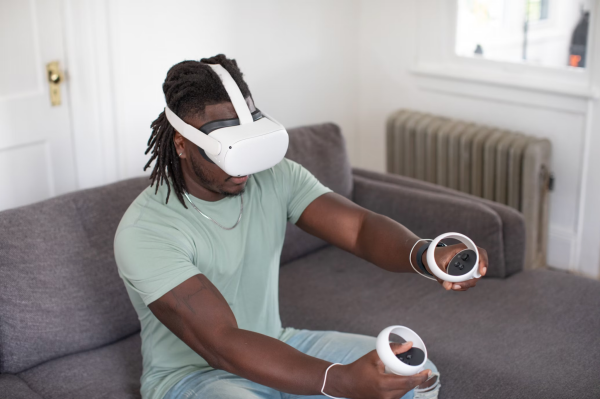
Virtual Reality for Simulated Training
VR is aimed toward gamers, but athletes can use it to train during unfavorable conditions such as snow, nighttime, or away games. Sports require rigorous, repetitive actions, and VR provides infinite opportunities for mental repetition without risk of injury or fatigue. Here’s how VR training is used today:
- Quarterbacks can read defensive changes by reliving risk-free blitz scenarios.
- Soccer players can take penalty shots during training sessions, strengthening their mental fortitude.
- Tennis players confront AI-generated rivals to diversify their tactics and gain exposure to unorthodox methods.
- Race car drivers learn every part of the pre-learned track, from sharp corners to narrow blind spots.
Along with tactical training, top-level clubs such as Manchester United and Bayern Munich are the first to combine VR and tactical training. Teams are prepared for every possible moment, and fans who bet understand how mentally teams prep for chaotic scenarios.
Fan Engagement and Immersive Experiences
Supporters no longer need to be at the stadium to catch every match. They can now access AR applications, 5G networks, and 360-degree replays. Fans are provided with interactivity such as switching between camera angles, hearing players’ voices, and viewing real-time statistics during the match. It goes beyond mere amusement; it is control. It influences fans’ wagering, loyalty, and spending.
| Tech Feature | What It Gives Fans | Example |
| Augmented Reality (AR) | Real-time stats over live view | NFL’s AR overlays on screens |
| 360° Stadium Cameras | Watch from any seat—even at home | Formula 1’s cockpit view stream |
| Personalized Push Alerts | Odds, substitutions, cards—instantly | Bet365 live alert system |
| Virtual Merchandise Stores | Buy gear inside VR stadiums during the match | PSG launched VR shop in 2024 |
For bettors, it is like being in the coach’s seat. Your perspective constantly changes, and every update adds something new.
Data-Driven Talent Scouting
Scouts have moved away from traditional intuitive approaches like instinct-based scouting. Instead, they rely on data from biometric scans, GPS trackers, and AI models. For example, a 16-year-old in Ghana can be spotted by a European club without leaving the country, as the club tracks every sprint, pass, and even heart rate.
Barcelona applies machine learning to identify players with movement patterns reminiscent of Messi’s from the early stages of his career. US baseball teams use AI to predict the age of peak performance in pitchers. Betting relies on these predictions, which means young and unproven players are not at risk of being overlooked. You could bet on him, and eventually, he is bound to be the one who changes the game. By then, the odds will have gone sky-high.
Ethical Concerns and Data Privacy
Along with technological advances comes the ability to access and collect data, which may be helpful but also risky. Athletes’ trackers are available 24/7, whether on the field, off the field, or even during sleep. But who gets to access this data? Is the club’s health information of players sold? Would it be possible to anticipate injuries and cancel contracts?
In 2023, European-based cycling teams faced fines for lacking genetic markers and risking data access without consent. The simple question for fans and players is: Where is the boundary? Yes, tech assists an athlete’s performance, but ethics should remain at the core. Tech goes out of bounds when it shifts into a realm of surveillance.
The Future: Tech as the New Teammate
At this point, it is neither a man’s nor a machine’s turn to play the game. Instead, we see the blending of these entities as headsets, tablets, and AI not taking a back seat. Coaches, bettors, and athletes looking to gain an edge over others must scavenge for data inputs or risk losing the game.
Get today’s sure football prediction here